


In the realm of automotive engineering, the pursuit of efficiency and performance drives continuous innovation. Among the most notable advancements is the Multi-Point Fuel Injection (MPFI) system, a modern marvel supplanting traditional carburetor engines. Our comprehensive guide navigates the complexities of MPFI, illuminating its components, operational mechanics, advantages, and how OLX streamlines the search for MPFI-equipped vehicles.”
What is MPFI?

Multi-Point Fuel Injection (MPFI) is a precision-centric system where fuel injectors dispense fuel directly into the intake manifold near each cylinder’s intake valve. This meticulous process ensures consistent fuel delivery to each cylinder, augmenting engine performance, fuel efficiency, and emissions control.
MPFI Engine vs. Carburetor Engine Difference
- Precision: MPFI systems deliver fuel with high precision, whereas carburetor engines mix air and fuel mechanically, leading to less accurate fuel delivery.
- Efficiency: MPFI systems are more fuel-efficient due to better fuel atomization and mixing, while carburetors are generally less efficient.
- Emissions: MPFI engines produce fewer emissions compared to carburetor engines due to more complete combustion.
- Maintenance: Carburetors are simpler and easier to repair, whereas MPFI systems are more complex but require less frequent maintenance.
Components of MPFI
An MPFI system comprises several key components that work together to ensure efficient fuel delivery and engine performance. Here are the main components:
1. Fuel Injectors
Each cylinder has its fuel injector, which sprays a fine mist of fuel directly into the intake manifold near the intake valve. This ensures precise fuel delivery.
2. Fuel Pump
The fuel pump delivers fuel from the tank to the injectors at the required pressure, ensuring a steady supply of fuel for optimal engine performance.
3. Fuel Pressure Regulator
This component maintains a constant fuel pressure in the fuel rail, ensuring that the injectors receive fuel at the correct pressure for efficient operation.
4. Engine Control Unit (ECU)
The ECU is the brain of the MPFI system. It processes data from various sensors to calculate the optimal amount of fuel to be injected.
5. Sensors
Various sensors provide real-time data to the ECU, helping it make accurate fuel delivery decisions. Key sensors include:
- Oxygen Sensor: Measures the oxygen level in the exhaust gases to adjust the air-fuel mixture.
- Throttle Position Sensor: Monitors the position of the throttle valve to determine engine load.
- Mass Air Flow Sensor: Measures the amount of air entering the engine to calculate the correct fuel amount.
6. Fuel Rail
The fuel rail is a conduit that distributes fuel to the injectors, ensuring each injector receives a consistent supply of fuel at the required pressure.
How Does MPFI Work?
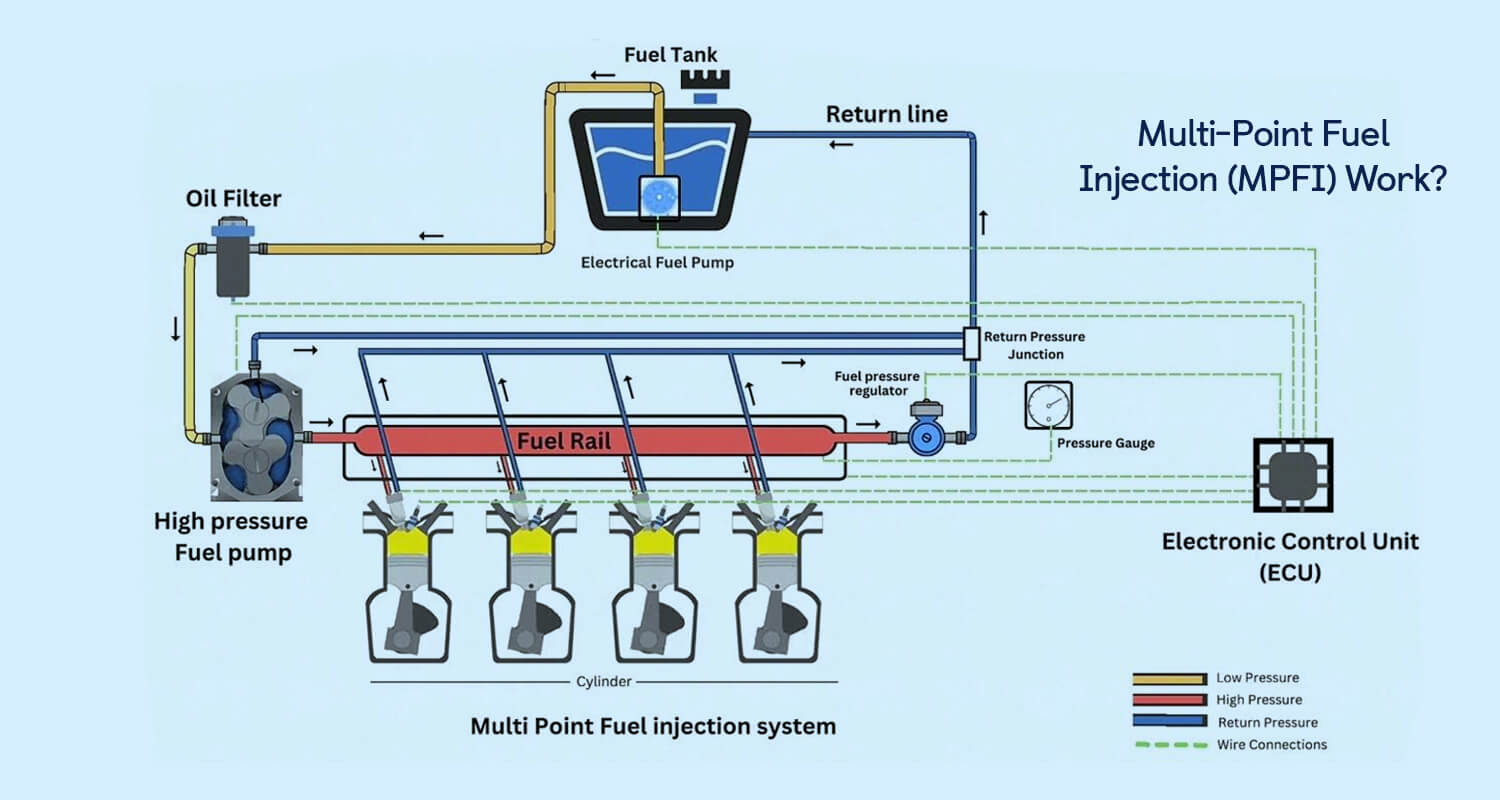
The MPFI system operates through a series of precise steps that ensure efficient fuel delivery and combustion. Here’s a detailed look at how it works:
1. Fuel Delivery
The fuel pump draws fuel from the tank and delivers it to the fuel rail. The fuel pressure regulator ensures that the fuel is supplied at the correct pressure.
2. Sensor Data Collection
Various sensors collect real-time data on engine parameters such as air intake, throttle position, and exhaust oxygen levels. This data is sent to the ECU.
3. ECU Processing
The ECU processes the sensor data and calculates the optimal amount of fuel needed for each cylinder. It considers factors like engine speed, load, and temperature.
4. Fuel Injection
Based on the ECU’s calculations, the fuel injectors spray the precise amount of fuel into the intake manifold near each cylinder’s intake valve. This creates a fine mist that mixes well with the incoming air.
5. Combustion
The air-fuel mixture enters the combustion chamber, where it is compressed by the piston and ignited by the spark plug. This results in efficient combustion, producing the power needed to drive the engine.
Advantages of MPFI
The MPFI system offers several advantages that make it a preferred choice for modern engines. Here are the key benefits:
- Improved Fuel Efficiency: By delivering fuel with high precision, the MPFI system ensures an optimal air-fuel mixture, leading to better fuel efficiency and reduced fuel consumption.
- Enhanced Engine Performance: MPFI systems provide more accurate fuel delivery, resulting in smoother and more responsive engine performance. This translates to better acceleration and overall driving experience.
- Reduced Emissions: Efficient fuel combustion minimizes the production of harmful emissions such as carbon monoxide, hydrocarbons, and nitrogen oxides. This helps in meeting stringent emission standards.
- Better Cold Start Performance: MPFI systems ensure a consistent fuel supply, even during cold starts. This eliminates the need for a choke and improves cold start performance.
- Increased Reliability: The precise control of fuel delivery reduces the chances of engine knocking and other issues, leading to increased engine reliability and longevity.
Disadvantages of MPFI
While the MPFI system offers numerous benefits, it also has some drawbacks that should be considered:
- Higher Cost: MPFI systems are more complex and expensive to manufacture and maintain compared to simpler fuel injection systems. This can increase the overall cost of the vehicle.
- Maintenance Complexity:The advanced components and sensors in an MPFI system require regular maintenance and occasional repairs, which can be more complex and costly.
- Sensitivity to Fuel Quality: MPFI systems are sensitive to fuel quality. Contaminated or poor-quality fuel can lead to clogged injectors and other issues, affecting performance and reliability.
Takeaways
The Multi-Point Fuel Injection System (MPFI) is a great example of how far car tech has come. It provides better fuel economy, speed, and control of pollution. You can enjoy the benefits of modern fuel delivery systems and make smart choices when buying your next car if you know how MPFI works.
Why wait then? Explore OLX today to find the right MPFI-equipped car that will make your driving experience better!
Frequently Asked Questions
Do direct injections and multi point injections have the same method?
The main difference between direct injection systems and multi-point injection systems (MPFIs) is direct injection systems put fuel straight into the cylinder, while MPFIs put it in through the intake pipe.
Does it matter if MPFI engines perform better than carburetor-powered engines?
MPFI engines are superior to other engines in terms of torque, power, and performance. Fuel distribution is more precise with MPFI systems, which improves combustion and acceleration.
What is the fuel efficiency rating of an MPFI or carburetor engine?
Most of the time, carburetor engines use more fuel than PFI systems. This is because PFI systems precisely distribute and control fuel, which promotes full burning and lowers fuel loss.
How does MPFI improve engine performance?
MPFI improves engine performance by delivering the precise amount of fuel to each cylinder based on the engine’s requirements, resulting in better combustion efficiency and power output.
Is MPFI suitable for all types of engines?
MPFI is suitable for most modern internal combustion engines, including gasoline-powered vehicles. It is particularly beneficial for engines that require precise fuel delivery and high performance.


