


When it comes to motorcycle safety, a few decisions are important such as choosing the right helmet. The ongoing debate between open face vs full face helmets centers around finding the perfect balance between protection, comfort, and practicality. This comprehensive guide explores the key differences, safety benefits, and practical considerations to help you make an informed decision about which helmet style best suits your riding needs. So, let us begin.
Understanding Open Face vs Full Face Helmet
Full-face helmets provide comprehensive coverage while half-face helmets cover only the top and sides of the head, offering less protection but providing better ventilation and a more open feel.
Let’s understand full face helmet vs half face in detail:-
Full Face Helmets

Full-face helmets completely enclose the head, featuring a chin bar and face shield that provides comprehensive protection. These helmets are characterized by their all-in-one design, covering the entire head to guard against injuries.
Key Features
- Complete head coverage including chin and face
- Integrated face shield for eye protection
- Better noise reduction and aerodynamics
- Enhanced protection from weather elements and debris
Explore a Wide Range of Pre-Owned Bikes, Scooters & Bicycles on OLX
Open-Face (Half) Helmets

Open-face helmets, sometimes called three-quarter or half helmets, cover the top, sides, and back of the head but leave the face exposed. These helmets typically weigh less and provide more airflow than their full-face counterparts.
Key Features
- Partial head coverage (top, back, and sides)
- No chin or facial protection
- Lighter weight and better ventilation
- Often includes a visor for minimal eye protection
Safety Comparison: What the Research Shows
The debate between full-face helmet vs half-face helmet designs ultimately narrows down to safety statistics and real-world performance.
Impact Protection
Multiple studies have consistently demonstrated the superior protection offered by full-face designs:
- According to research published in the Journal of Neurotrauma, full-face helmets reduce head injuries by approximately 45% compared to open-face models
- A landmark study by Hurt Report found that 34.6% of all motorcycle crash impacts occur in the chin and face area – precisely where open-face helmets provide no protection
- Crash test data indicates that full-face helmets distribute impact forces more effectively across the entire helmet
Environmental Protection
Beyond crash impact protection, helmets also shield riders from environmental hazards.
Here is a table for better understanding:-
| Protection Type | Full-Face | Open-Face |
| Debris/Insects | Excellent | Poor to Fair |
| Wind/Noise | Excellent | Fair |
| Rain/Weather | Excellent | Poor |
| UV Exposure | Excellent | Fair (Depends on the visor) |
Practical Considerations Beyond Safety
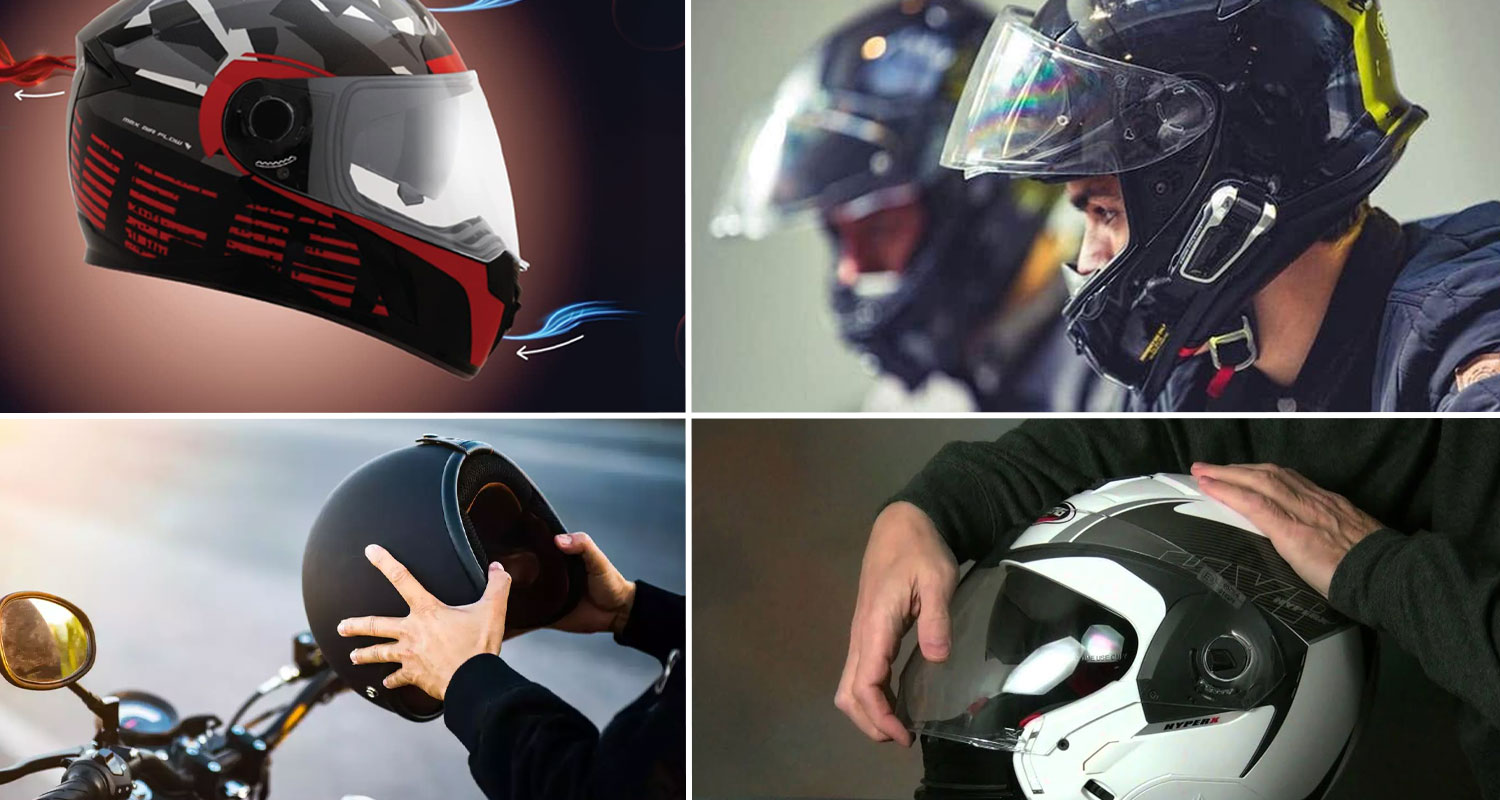
While safety should be paramount, several practical factors influence helmet choice:
Comfort and Usability
Open-face helmets generally offer advantages in comfort and convenience:
- Airflow: Better ventilation, especially in hot weather
- Communication: Easier to talk with others without removing the helmet
- Accessibility: Simpler to put on and remove
- Claustrophobia: Preferred by riders who dislike the enclosed feeling of full-face helmets
Riding Context
Your typical riding environment significantly impacts which helmet style makes more sense. For instance:-
- Highway/high-speed Riding: Full-face helmets provide crucial protection from wind fatigue and debris at higher speeds
- Urban/low-speed Riding: Open-face helmets may offer adequate protection with greater comfort for stop-and-go traffic
- Touring/long Distance: Full-face helmets typically reduce fatigue during extended rides
- Warm Climate Riding: Open-face designs provide better ventilation, though modern full-face helmets have improved cooling systems
Making Your Choice: Who Should Choose Which Style?

Choosing between an open-face vs full-face helmet depends on your riding style, comfort preferences, and safety priorities. Here’s who should pick which one.
Full-Face Helmets Are Ideal For
- Sportbike riders and performance-oriented motorcyclists
- Highway commuters and long-distance tourers
- Riders prioritise maximum safety over convenience
- All-weather and all-season riders
- Novice riders who benefit from maximum protection
Open-Face Helmets May Be Suitable For
- Cruiser and scooter riders in urban environments
- Riders in extremely hot climates (though full-face helmets with good ventilation are still safer)
- Those who frequently need to communicate or prefer an open feeling
- Riders who use communication systems that require more exterior access
Check Out: Second Hand Royal Enfield Classic 350
Expert Recommendations
Most motorcycle safety experts and organizations recommend full-face helmets for all riders regardless of experience level or motorcycle type. The added protection for the face and chin area dramatically improves safety outcomes in crash scenarios.
According to the Motorcycle Safety Foundation: “A full-face helmet that meets DOT standards provides the most protection for motorcycle riders. While other helmet types may be more comfortable in certain situations, they compromise safety by leaving the face and chin exposed.”
Key Takeaway
When comparing open-face vs full-face helmet options, the evidence clearly demonstrates that full-face helmets offer superior protection in nearly all situations. However, the “best” helmet ultimately depends on your personal riding style, frequency, environment, and comfort needs.
If safety is your absolute priority, a quality full-face helmet from a reputable manufacturer is the clear choice. If you value the open-air feeling and primarily ride at lower speeds in urban environments, an open-face helmet certified to safety standards still provides meaningful protection compared to riding without a helmet.
Remember that the best helmet is one that you’ll wear consistently on every ride. Choose a helmet that balances your safety needs with comfort factors that ensure you’ll actually use it.
Pro tip: You can explore pre-loved helmets on platforms like OLX find great deals and make an informed choice.
Frequently Asked Questions
Are full-face helmets always safer than open-face helmets?
Yes, studies consistently show that full-face helmets provide better protection and security when riding a bike.
Do full-face helmets restrict vision compared to open-face designs?
High-quality full-face helmets are designed with wide eye ports, offering peripheral vision similar to that of open-face helmets, ensuring a clear view without compromising safety.
Are open-face helmets legal in all states?
Yes, open-face helmets that meet DOT standards are legal in all states with helmet requirements. However, some states do not have helmet laws.
Do full-face helmets get too hot in summer?
Modern full-face helmets feature advanced ventilation systems that significantly reduce heat buildup. Many riders find them comfortable year-round with proper ventilation settings.
Which helmet style is better for glasses wearers?
Both styles can accommodate glasses, though some riders find open-face helmets slightly more convenient. Many full-face helmets now include “eyeglass channels” in the padding.
Also Read:


